
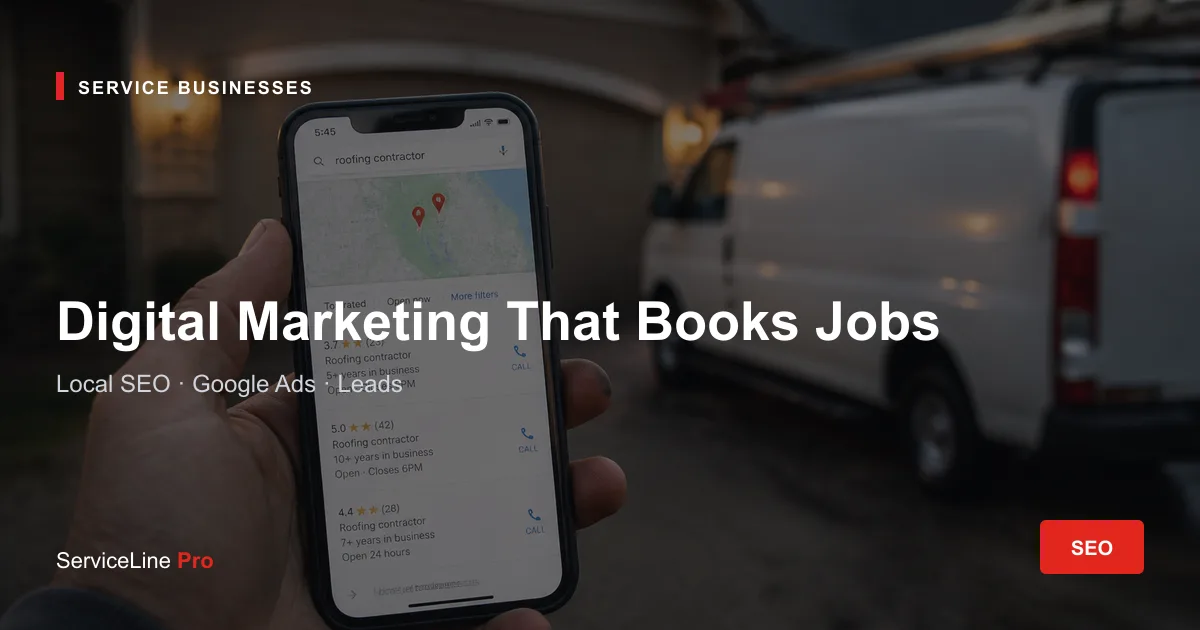


Most contractor sites are not starving for visitors. They are starving for the right visitors. A thousand clicks from a blog about "what is a heat pump" does not fill a Tuesday. One search for "AC repair near me" can.
If your shop swings between slammed weeks and quiet crews, the mix is usually wrong. Broad social posts, generic SEO articles, and homepage ads buy attention. Local intent search buys jobs. Drive traffic to the website only after you know which traffic can become a booked call.
Rank channels by buyer intent
Put every source in one of two piles: people who need the work this week, and people who might need it someday. Fund the first pile until it is tracked and converting. The second pile waits.
- ·Google Business Profile and the Map Pack. Many callers never hit the website. Still count this as demand, because the listing and the site share name, phone, and reviews.
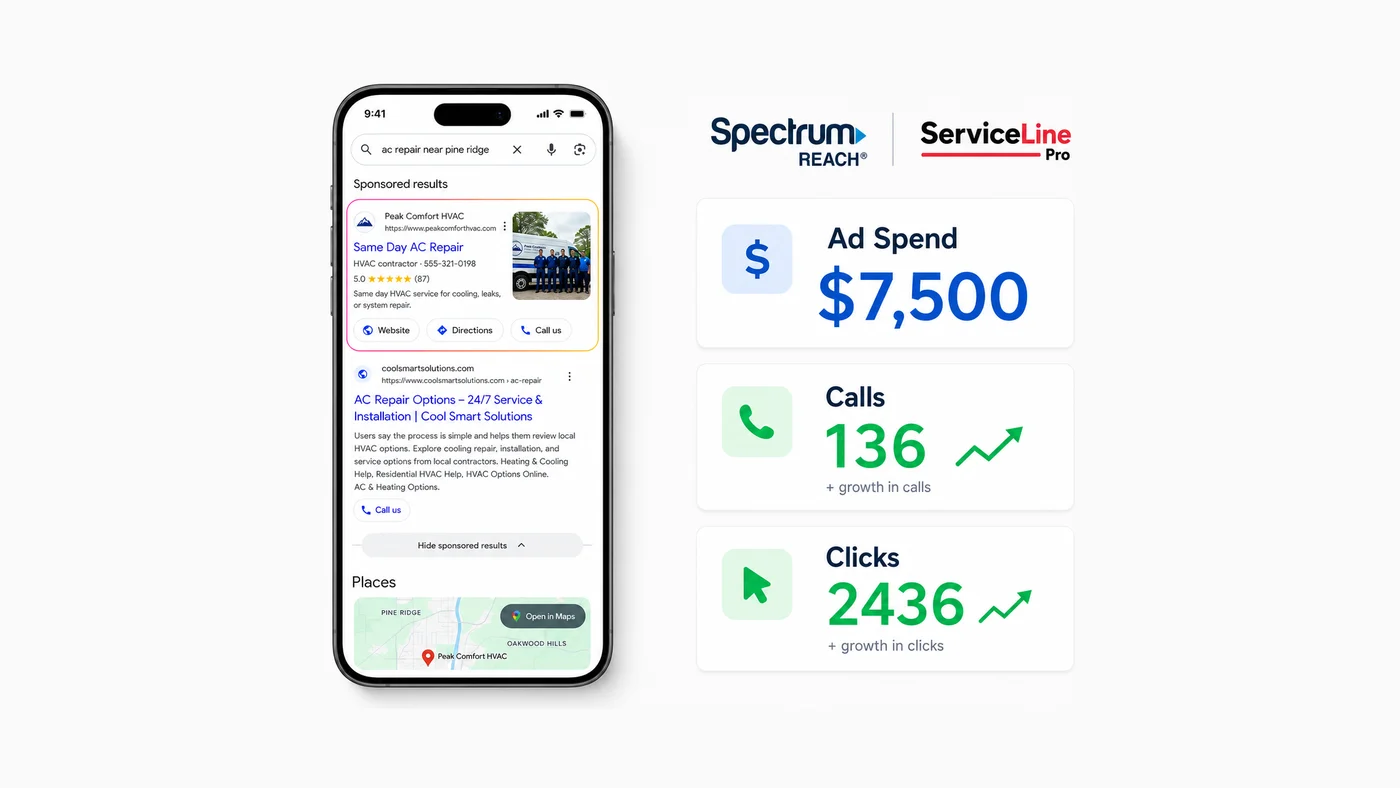
- ·Google Search ads on service-plus-city terms. Immediate need. Send each ad to a matching service page, not the homepage.
- ·Organic service and city pages. Slower to build. Owned once they rank.
- ·Referral and direct. Track the phone number so you do not credit "website" for work that came from a neighbor.
Facebook, Instagram, YouTube, and Nextdoor can support trust. They are weak as the primary lead engine for emergency plumbing, roof leaks, or no-cool calls. Use them to show real jobs. Do not buy traffic from them until search is working.
"If a tactic does not help you show up for a local service search or turn a click into a booked job, it stays off the weekly list."
"If a tactic does not help you show up for a local service search or turn a click into a booked job, it stays off the weekly list."
Fix the pages before you buy more clicks
Traffic to a slow or confusing site is wasted spend. Before you raise budget, walk the site on your phone the way a customer would.
- 01 Tap the number in the header. It must click-to-call. If it is a graphic, fix it.
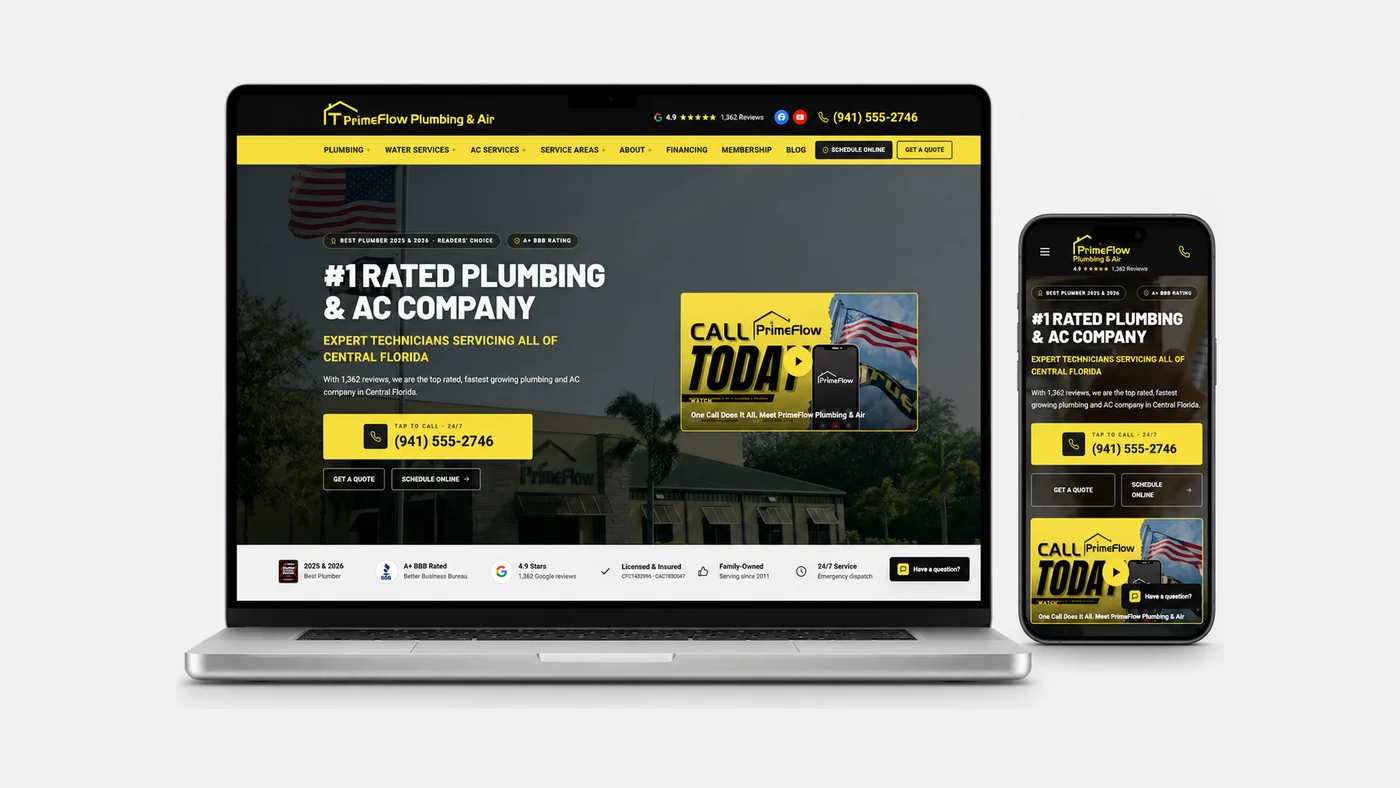
- 02 Load the main service pages on cellular. Websites we ship are built to load in under two seconds. If yours takes five, paid search will feel expensive even when the keywords are right.
- 03 Give each service its own page: drain cleaning, water heater, condenser replacement, reroof. One homepage with ten buttons loses the click.
- 04 Put a short form and the phone number above the fold. Ask for name, phone, city, and the problem. Nothing else.
- 05 Send form fills to email and your CRM the same minute. A form that dies in spam is a broken channel.
Stop sending paid traffic to the homepage
"Emergency plumber" should land on emergency plumbing. "Kitchen remodel Tampa" should land on kitchens. The page headline should match the search. The first button should be the call. That single change usually does more for cost per lead than a new keyword list.
Weekly work that feeds Google
Local search traffic grows when Google sees proof you do specific work in specific places. That proof lives on the profile and on the site.
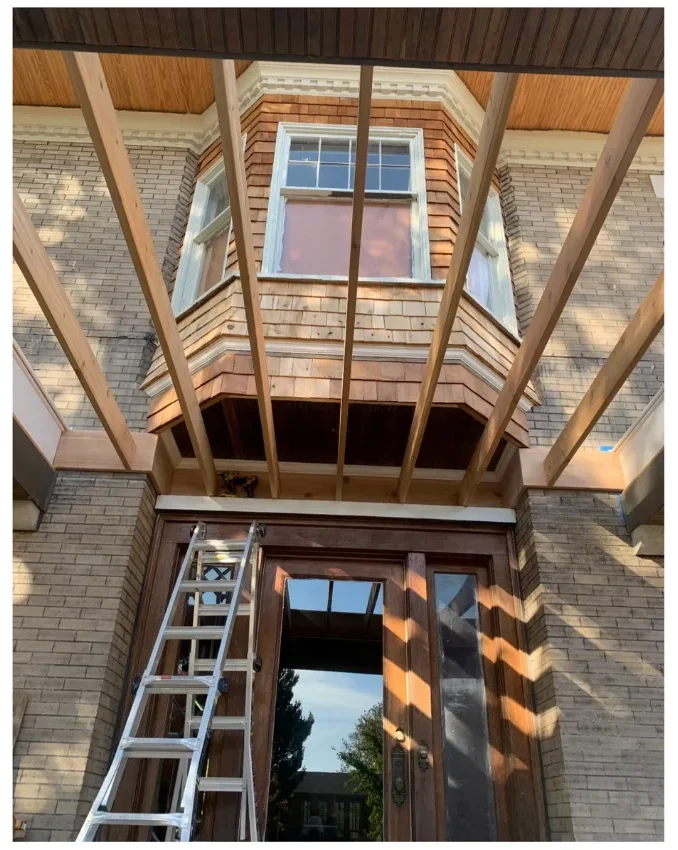
- ·Upload real job photos to Google Business Profile with the city in the caption.
- ·Post a short update when you finish a notable job. Service, neighborhood, outcome.
- ·Keep NAP identical: name, address, phone on the site, the profile, and directories.
- ·Add or refresh city pages only when you actually run crews there. Fake city pages do not hold rankings.
- ·Ask for a Google review the day the job is done.
Read why local SEO matters if you need the ranking logic. The operating version is simpler: feed the listing, keep the pages fast, and measure calls.
Score traffic by booked jobs
Sessions and impressions are not a P&L. Put unique tracking numbers on the site, the profile, and ads. Grade calls: in area, during hours you can take work, decision maker, real project. Then compute cost per booked job, not cost per click.
Google Ads at ServiceLine Pro runs with a $0 agency fee. The Spectrum Reach partnership pays us. Around $5,000 a month in ad spend is typical in a competitive metro, and leads often show inside 7 days once tracking and pages are in place. SEO at $3,000 a month is the longer asset: a 90-day Top-3 Map Pack target, not a ranking guarantee. If the target is missed, the work continues.
Should I pause ads until SEO ranks?
If crews are light this month, run search ads on the jobs you want while SEO is built. Ads pay for demand this week. SEO is meant to lower how much you must buy later. Run both when the budget can cover $5,000 in ads plus $3,000 in SEO. If it cannot, pick the channel that matches the timeline: ads for this week, SEO for the next two quarters.
Put this into practice
Track every dollar to a call and every call to a booked job. Google Ads management runs with $0 agency fee at typical metro spend around $5,000 a month. Start with the $1,000 Growth Audit or book a strategy call at (813) 669-7572.
Get a real diagnosis of your business.
A seven-layer review of your SEO, Google Ads, website, and Map Pack presence, delivered as a written report within 72 hours. It's $1,000 and it always credits toward any work you do with us. If we don't find $100,000 in missed revenue, we refund it.
Get the Growth Audit