



You are spending on Google Ads, getting calls and forms, and still cannot say whether the campaign made money. Or you tried Google Ads for contractors, saw a burst of activity, and pulled back because the results felt expensive and impossible to trust.
That is usually tracking, geo, and service mix, not “Google Ads does not work for trades.” HVAC, plumbing, electrical, roofing, and GCs can all run profitable accounts. They need a system that ties spend to booked jobs, jobs to revenue, and revenue back to campaigns, keywords, and zips. For local-lead campaign types, see Google Ads for contractors: local leads.
Why contractor accounts bleed cash
Most accounts do not fail because nobody clicks. They fail because the report stops at calls, forms, CTR, and CPL. Cheap leads that your CSR cannot book, your estimator cannot close, or your office cannot match to an invoice will look healthy while the business loses money.
Attribution is the leak
Sona’s guide to Google Ads tracking for commercial contractors notes that an average of 20 to 30% of conversions happen offline and get missed without full-funnel tracking. If you book estimates by phone and close in a CRM weeks later, form fills will lie.
"If reporting ends at “lead generated,” you are measuring activity."
The same source cites CTR bands and CPL ranges that only matter if the conversion you optimize is a real job. Google will chase whatever you mark as a conversion, including junk forms.
"If reporting ends at “lead generated,” you are measuring activity."
Owners often quit inside 60 days because they judged the campaign on the wrong metric. The account needed call grading and job-level feedback, not a pause.
What usually drains the budget
- ·Broad geos: ads in towns you rarely win.
- ·One campaign for every trade and ticket size.
- ·Homepage landings for high-intent searches.
- ·No definition of a qualified call before launch.
- ·Optimizing to form fills that never become revenue.
Build backward from profit
Define the jobs you want more of: kitchen remodels, panel upgrades, replacements, commercial TI. Separate campaigns for high-ticket project work versus emergency service. Different close times, different landing pages, different bids.
Before launch, get this stack live:
- 01 GA4 and Google Ads linked. Conversion actions for calls, forms, and (when you can) booked jobs imported from the CRM.
- 02 Call tracking with unique numbers per campaign. Recordings for grading.
- 03 A written qualified-call rule: decision maker, business hours, real project or service need, contact captured.
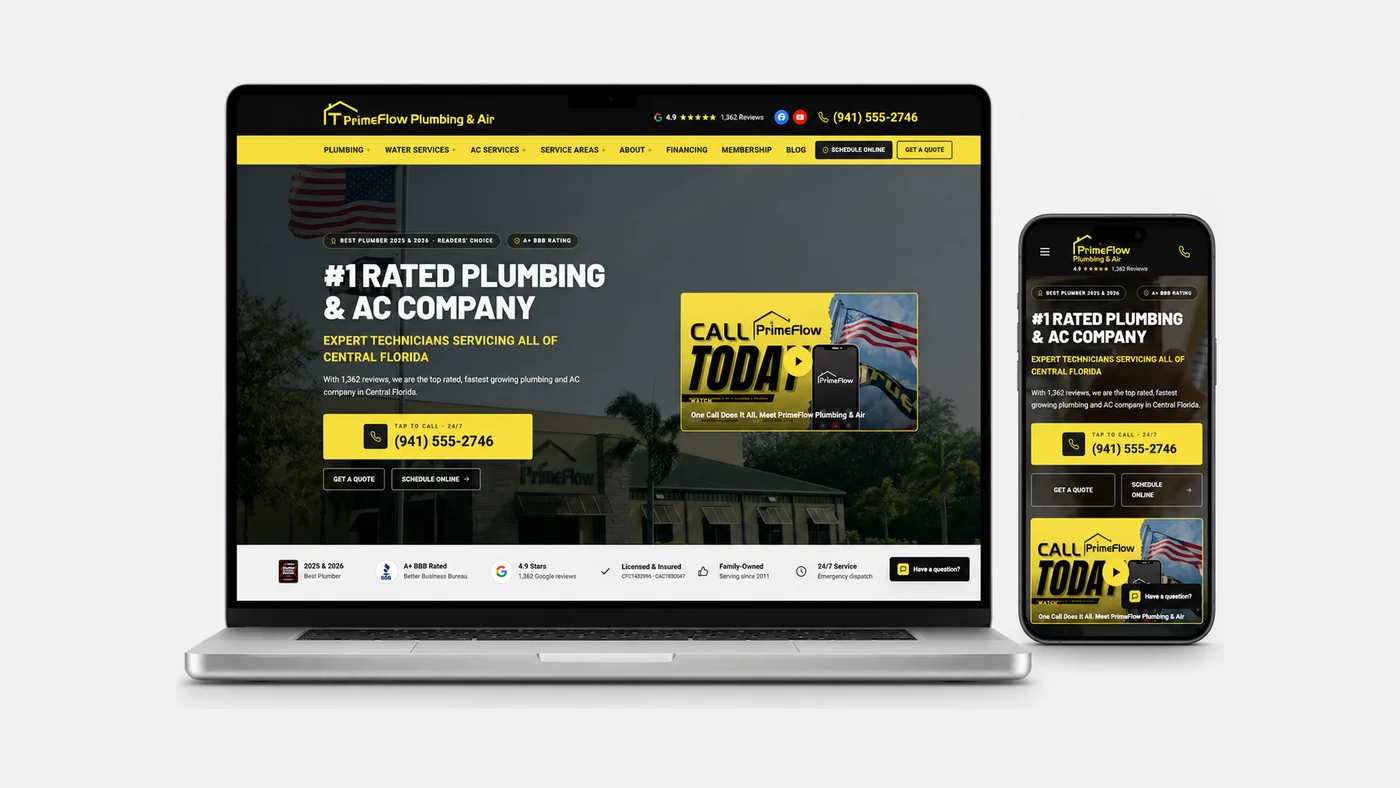
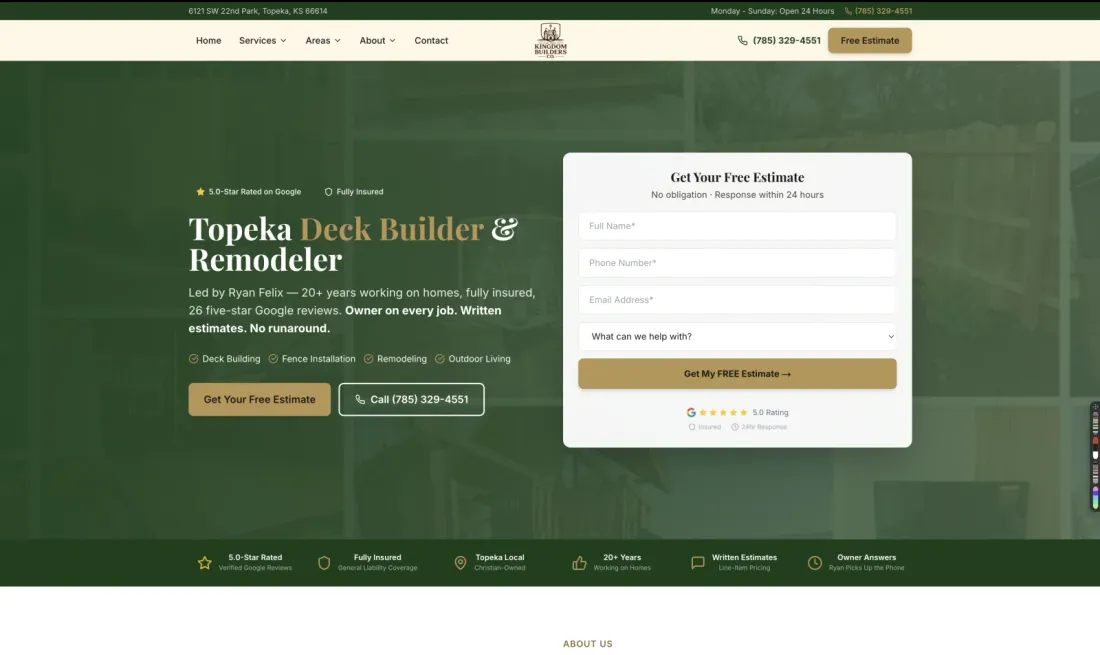
- 04 Landing pages per service, not the homepage. Load under two seconds.
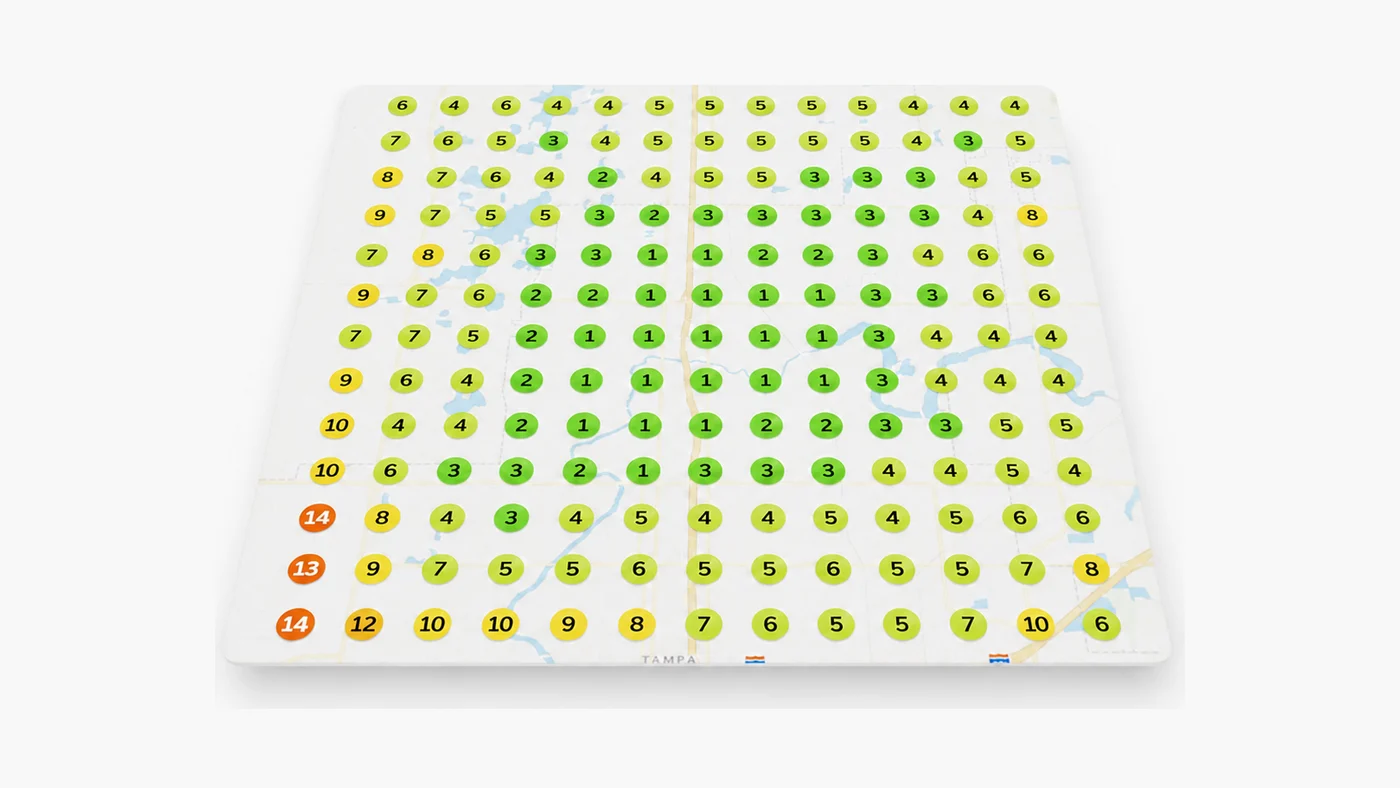
- 05 Geo targeting that matches dispatch, plus exclusions for cities you will not drive.
- 06 Negatives for DIY, jobs, training, and “how to.”
Budget and fee
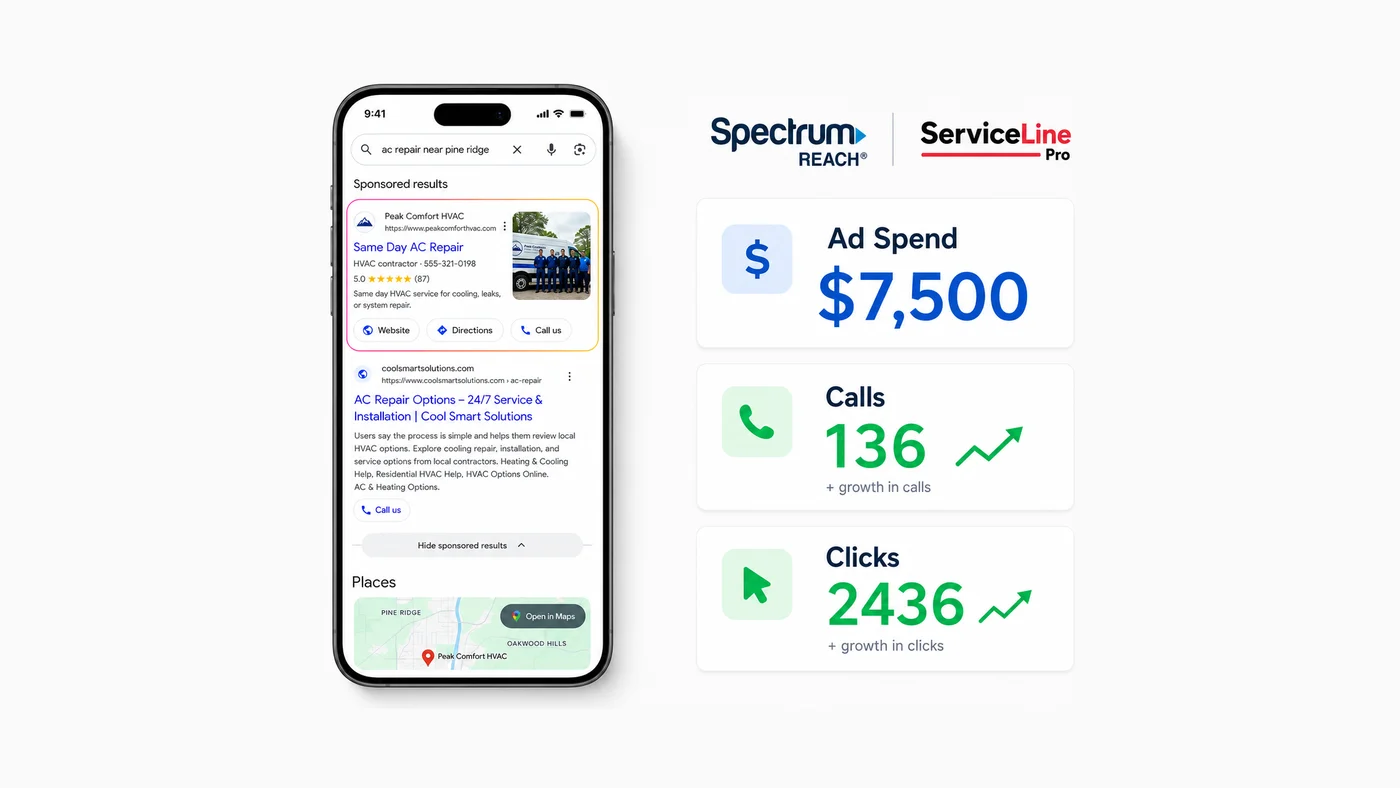
A budget that cannot buy enough clicks cannot teach you anything. Our Google Ads work is $0 agency fee through Spectrum Reach. Around $5,000/mo is typical in a competitive metro. Calls often start inside seven days. We review at 30, 60, and 90 days.
If you need pipeline while tracking is being rebuilt, Pay Per Qualified Lead uses a $1,000 deposit credited toward qualified calls only.
Pair ads with owned search
Ads stop when you pause. SEO at $3,000/mo targets Top-3 Map Pack in 90 days. Target, not guarantee. Feed converting ad keywords into service pages. Local SEO for contractors covers the map side.
OTT is branding from about $5,000/mo. It will not replace Search for booked jobs. Keep Apple Business Connect accurate. Paid social exists. We do not sell it as the contractor lead engine here.
Bring the current account to a Growth Audit ($1,000, credited) or book a strategy call at (813) 669-7572.
Frequently Asked Questions
What is a good CPL for contractors?
CPL is incomplete. Use cost per booked job and close rate by service. Sona cites break-even CPL bands in some contractor accounts; your ticket size sets the real ceiling.
How long before I know if contractor Google Ads work?
Calls can start inside seven days. Give the account 30 days of clean tracking before you judge ROI, then 90 days before you rewrite the whole structure.
Should GCs and trade contractors run the same account structure?
No. Project work needs longer forms, estimate workflows, and different keywords than emergency service. Split them.
Get a real diagnosis of your business.
A seven-layer review of your SEO, Google Ads, website, and Map Pack presence, delivered as a written report within 72 hours. It's $1,000 and it always credits toward any work you do with us. If we don't find $100,000 in missed revenue, we refund it.
Get the Growth Audit