
Most roofers who hate Google Ads got activity, not jobs. Clicks, form fills, and a monthly PDF. Then the estimator spends an afternoon on a renter, an insurance fishing trip, or an address three towns outside the service area.
Google Ads for roofers works when you treat it as a revenue system: urgent intent, tight geos, landing pages that convert, fast answer, hard negatives, and tracking through the signed contract. Roofing clicks are expensive. Sloppy structure burns the month by lunch.
Bid on the job, not the word “roofing”
“Roofing company” is loose. “Emergency roof leak repair,” “hail damage roof inspection,” and “roof replacement estimate” are different buyers. One needs a tarp today. One wants a quote. One is collecting ideas for a metal roof next year.
Build keyword groups around buying intent:
"If you cannot trace a click to a call to an estimate to a closed job, you are buying reports."
- ·Urgent repair: roof leak, emergency roof repair, active leak, storm damage, tarping.
- ·Replacement: roof replacement quote, estimate, inspection, cost, contractor near me.
- ·City and county modifiers for the markets your crews actually run.
- ·Insurance terms only if your office can screen those calls and your sales process handles claim-driven jobs.
Then protect the account. Negatives for DIY, jobs, salary, materials, “how to,” and out-of-area cities. In roofing you also filter storm chasers, lead resellers, and shoppers who will never sit for an estimate. If the query does not sound like a local owner with a real roof problem and a budget, cut it.
Split campaigns the way the P&L splits
One campaign named “Roofing” hides the truth. You will not know whether repair is carrying the account, whether replacement CPL is too high, or whether one zip is junk.
- ·Service type: repair, replacement, commercial, metal, storm.
- ·Geography: priority cities vs overflow.
- ·Residential vs commercial if both exist.
- ·Storm surge vs evergreen demand, with budgets you can throttle when weather hits.
That structure lets you fund the work you want more of. Repair may book faster. Replacement may pay the year. Commercial needs different copy and a different landing page. For the organic side of the same market, see roofing SEO and roofing marketing.
Budget that can produce data
Tiny budgets create fake conclusions. Roofing CPCs in competitive metros routinely sit in the tens of dollars, and commercial terms can run much higher. A few hundred dollars a month will not tell you which terms close.
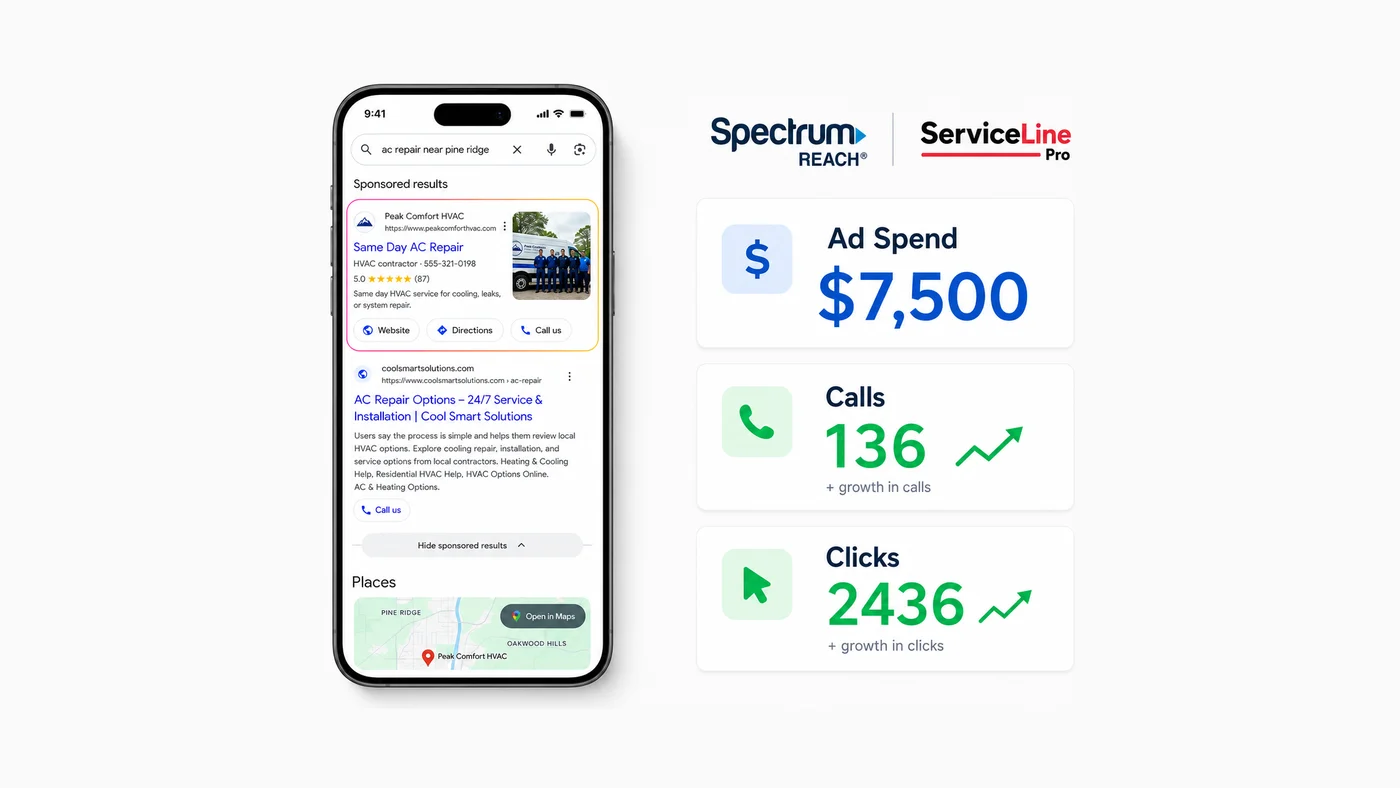
Our Google Ads management is $0 agency fee. Spectrum Reach pays us through the partnership, so the media budget stays in the campaign. Around $5,000/mo is typical in a competitive metro. Leads often show inside seven days. Tougher markets may need more. We size the budget to the auction, not a round number that feels comfortable.
"If you cannot trace a click to a call to an estimate to a closed job, you are buying reports."
Landing pages and the phone
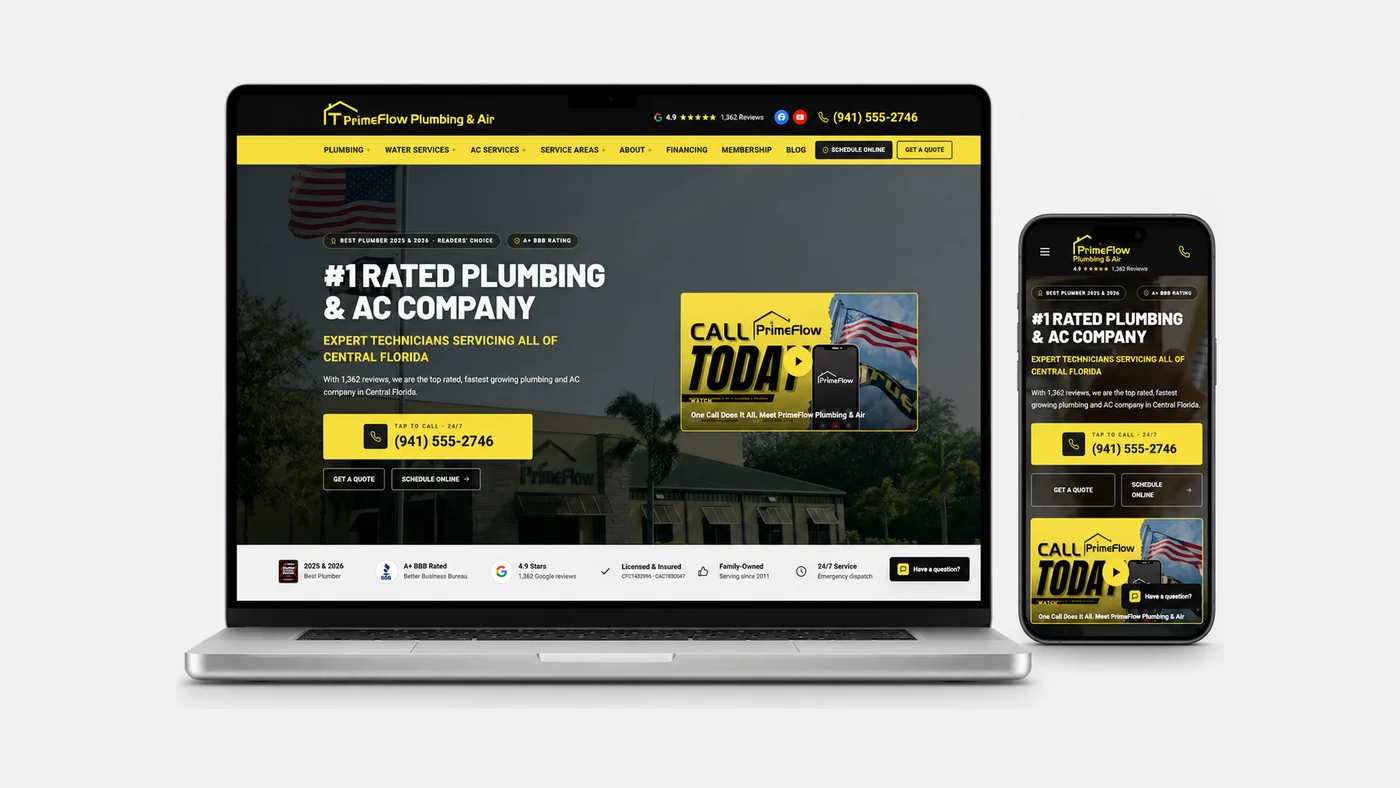
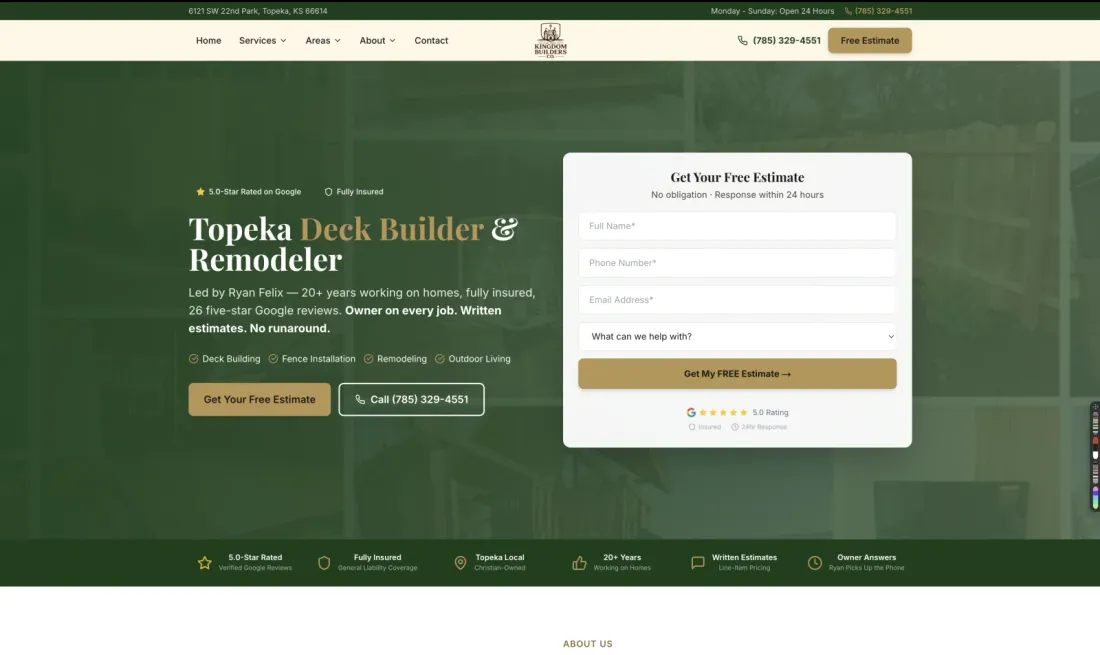
Do not send storm-damage traffic to a generic homepage. Match the ad: leak repair page, replacement page, commercial page. Phone in the header, click-to-call on mobile, short form, real job photos, license and manufacturer badges (GAF, Owens Corning, and so on if you hold them).
Sites we build load under two seconds, 30-day delivery, $2,500 once or $250/mo for 12 months. A four-second page-builder site will waste roofing CPCs.
Answer the phone. After-hours call-only ads that dump to voicemail are a donation to Google plus a referral to the next roofer. Schedule ads to hours you staff, or staff the hours you advertise.
LSAs, SEO, and what not to buy
Local Services Ads sit at the top with Google Guaranteed and bill per lead. They reward reviews and speed. They are a complement to Search, not a replacement for a structured account.
SEO campaigns at $3,000/mo target Top-3 Map Pack in 90 days. Target, not guarantee. Ads prove which keywords close. SEO turns those into owned calls. Pay Per Qualified Lead ($1,000 deposit credited) fills gaps while both ramp.
OTT is branding, typically $5,000/mo and up. Nobody calls from the Hulu spot. Use it after search is tracking. Keep Apple Business Connect accurate. Yelp stays a review directory, not a paid lead program.
Scoreboard
Track calls by campaign. Grade them: owner or decision maker, in area, real roof need, estimate set. Then cost per booked job and close rate. Use Proline’s roofing industry analysis has cited average Google Ads lead costs around $187 and close rates around 27% in some datasets. Your market will differ. The point is to measure your own booked-job cost, not industry averages.
Audit what you have with the Growth Audit ($1,000, credited) or book a strategy call at (813) 669-7572.
Frequently Asked Questions
How much should a roofer spend on Google Ads?
Around $5,000/mo is typical in a competitive metro. Some service areas run closer to $4,000. Tougher auctions need more. Our agency fee is $0. Size the budget to the market, not a guess.
Should roofers bid on insurance and storm keywords?
Only if the office can screen those calls and the sales process handles claim work. Otherwise those terms fill the calendar with low-close conversations.
How fast do roofing ads produce calls?
Often inside seven days once tracking and landing pages are live. The first 30 days are a ramp. Review at 30, 60, and 90 days.
Get a real diagnosis of your business.
A seven-layer review of your SEO, Google Ads, website, and Map Pack presence, delivered as a written report within 72 hours. It's $1,000 and it always credits toward any work you do with us. If we don't find $100,000 in missed revenue, we refund it.
Get the Growth Audit