









Most Florida service owners check traffic and assume marketing is working. Traffic can rise while the board stays thin. A measurable marketing result is a customer action that ties spend to growth: a tracked call, a qualified conversation, a booked job, revenue. This page is the scoreboard and the monthly ritual. The definition of results-driven marketing lives in what is results-driven marketing.
Vanity vs revenue
- ·Vanity: page views, likes, followers, impressions, email open rates
- ·Revenue: inbound prospect calls, form leads that book, completed jobs, repeat customers, average ticket
If you cannot trace a marketing dollar to a customer action, you cannot improve it. In Miami, Tampa, Orlando, and Jacksonville that gap is expensive because competitors already run ads and Map Pack programs with tracking.
Three numbers that run the budget
- 01 Lead-to-customer conversion: booked jobs divided by qualified leads. If 100 leads become 10 jobs, the leak is sales, pricing, or follow-up, not always media.
- 02 Cost per booked job vs ticket and margin. A $200 acquisition cost is fine on an $8,000 roof and fatal on a $250 drain call.
- 03 Return on ad spend for paid channels: revenue attributed to the campaign over ad spend. Use graded calls, not every click.
Build the tracking system
- 01 Unique numbers per channel (Google Ads, organic, GBP, LSAs). See call tracking.
- 02 Form and booking events in Analytics and the CRM.
- 03 UTM tags on every paid URL.
- 04 Weekly: lead quality and missed calls. Monthly: cost per booked job by channel. Quarterly: which channel to scale or cut.
A simple HVAC example: if paid search books jobs at $180 and a brand campaign books at $600 with a worse close rate, move money to search. Paid social exists. Treat it as remarketing after search works, not as the first Florida lead engine. Do not optimize for cheap leads that never close.
A scoreboard you can run in a spreadsheet
Columns: channel, spend, calls, qualified calls, estimates set, jobs booked, revenue, cost per booked job. Rows: Google Ads, LSAs, organic/Map Pack, PPQL, other. Fill it on the first Monday. One rule: if a channel cannot complete the row in 90 days, pause it. Do not wait for a BI tool. Florida seasonality belongs in a note column (AC peak, storm week) so you do not kill a winter heat campaign that only looks expensive in July.
"Measurable marketing results for Florida contractors: the weekly scoreboard, cost per booked job by channel, and the review ritual that stops vanity metrics from running the budget."
Why green dashboards hide a flat business
Traffic up, impressions up, followers up, revenue flat. Those numbers move because they are cheap to move. The numbers that grow a service business are harder: tracked calls, show rates, close rates, average ticket. An agency that never mentions them is optimizing the easy numbers. Write down cost per booked job by channel. Review it monthly. Treat every other metric as supporting evidence.
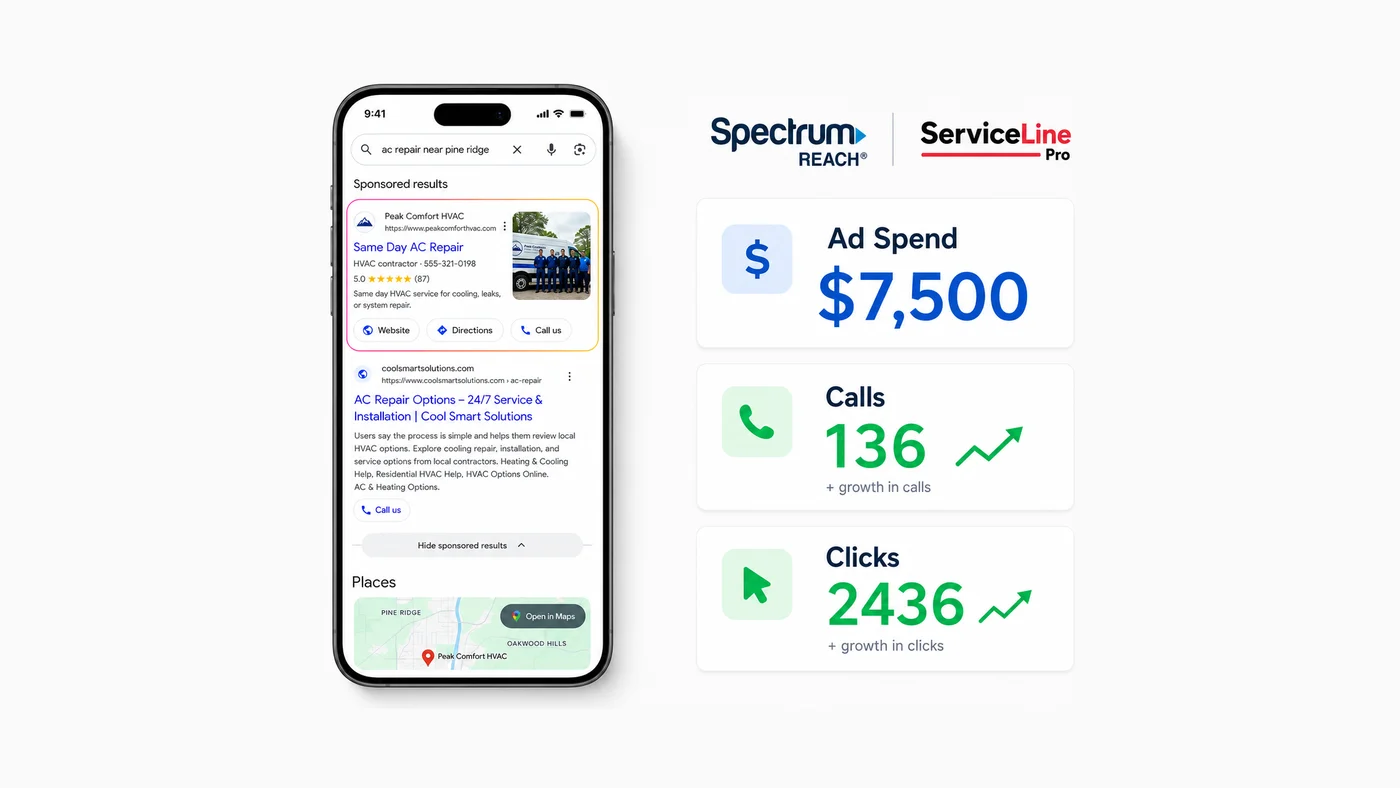
ServiceLine Pro reports tracked calls, qualified leads, and cost per booked job on Local SEO ($3,000 per month, 90-day Top-3 Map Pack target) and Google Ads with zero agency fees. The $1,000 Growth Audit shows the real scoreboard in 72 hours. Or book a strategy call at (813) 669-7572.
Frequently Asked Questions
Which marketing metrics show real growth for a home service business?
Tracked calls by source, qualified lead rate, cost per booked job, and revenue per channel. Traffic and impressions support the story. They are not the story.
How often should I review marketing results?
Weekly for lead quality and call handling. Monthly for cost per booked job. Quarterly for strategy. Longer cycles let waste pile up quietly.
What is a good cost per booked job?
It depends on ticket size. An $8,000 roofing ticket supports a much higher cost per job than a $250 drain call. Know your number. Push it down every quarter.
Get a real diagnosis of your business.
A seven-layer review of your SEO, Google Ads, website, and Map Pack presence, delivered as a written report within 72 hours. It's $1,000 and it always credits toward any work you do with us. If we don't find $100,000 in missed revenue, we refund it.
Get the Growth Audit