

Trucks are moving, techs can handle the work, and the phones still swing between dead quiet and chaos. One week you are buried in water heaters. The next week you are staring at ad invoices and cannot say what you paid for.
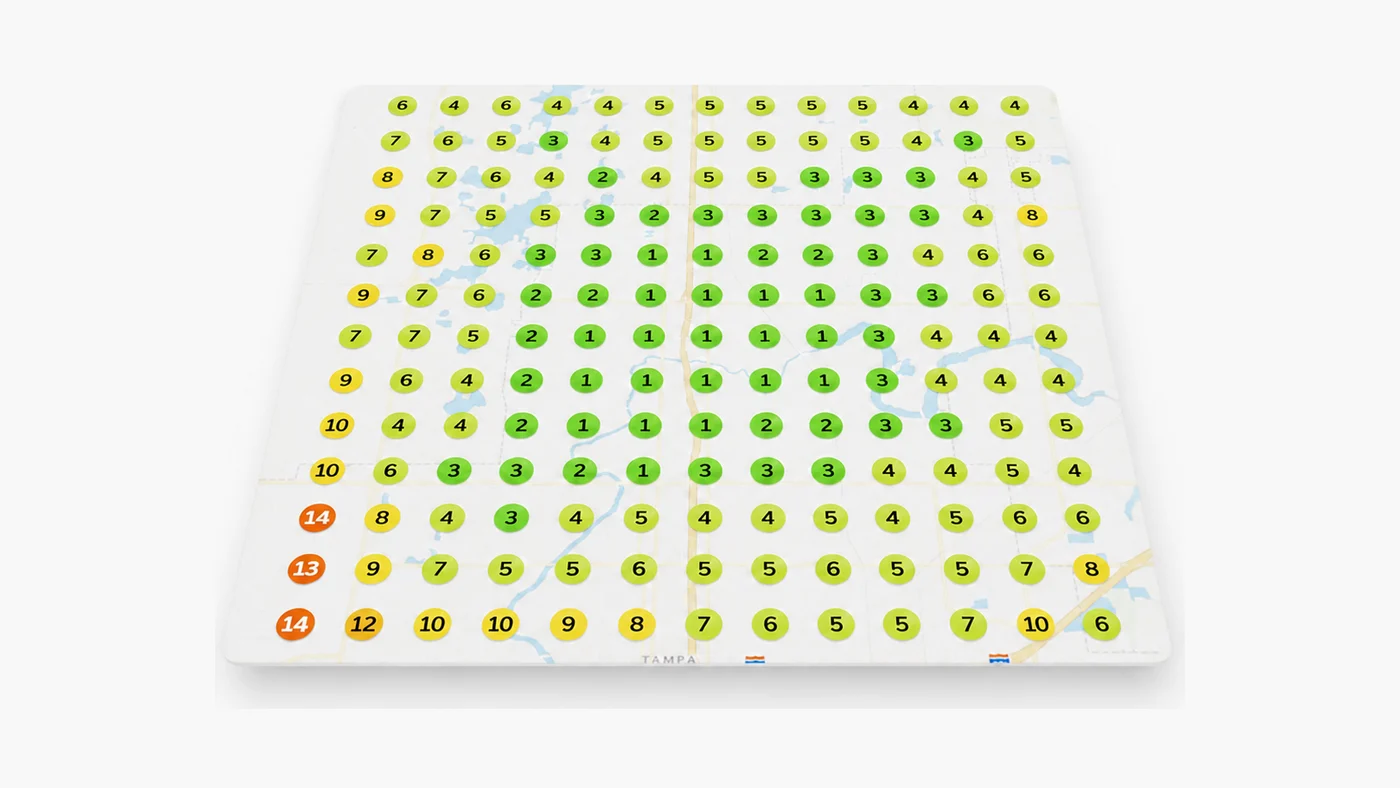
Plumbing marketing services fail when they stop at lead count. Junk calls burn CSRs. A slow site leaks paid clicks. An agency that cannot show booked jobs is selling activity. The useful question is which channels produce booked jobs at a cost you can live with, and what asset you are building for later. Map Pack tactics sit in local SEO for plumbing companies.
A blueprint, not a guess
Linxup’s plumbing industry statistics have put the U.S. plumbing market at $169.8 billion with about 132,000 businesses. Demand is real. Loose marketing still loses to the shop that shows up first on the map and answers the phone.
Guessing looks like this:
"A plumbing marketing plan should say where the next booked jobs come from and what asset you are building. If it cannot do both, it is incomplete."
- ·Phone volume swings so hard staffing stays reactive.
- ·Map visibility comes and goes on emergency terms.
- ·Reports look busy and never mention booked jobs.
- ·Spend is split across SEO, ads, social, and mailers with no order.
- ·The owner steps in after months of cost and no scoreboard.
Sequence first: most profitable services, zips worth pushing, channels with high intent, which leads book, what to scale or cut. Then match channels to whether you need jobs this week or map control in 90 days.
"A plumbing marketing plan should say where the next booked jobs come from and what asset you are building. If it cannot do both, it is incomplete."
The toolbox, in the order most shops should stack it
1. Local SEO and Google Business Profile
Jobber’s plumbing stats have cited large local-search share, heavy Map Pack click behavior on mobile, and review influence on hire decisions. Your profile and citations are where emergency demand gets sorted.
- ·Accurate categories, service areas, hours, photos, posts.
- ·NAP identical across directories. Yelp as a citation and review site, not a paid lead contract.
- ·City and service pages with real jobs, not thin swaps.
- ·Review asks tied to completed work.
- ·SEO campaigns at $3,000/mo, 90-day Top-3 Map Pack target. Target, not guarantee.
2. Google Ads and LSAs
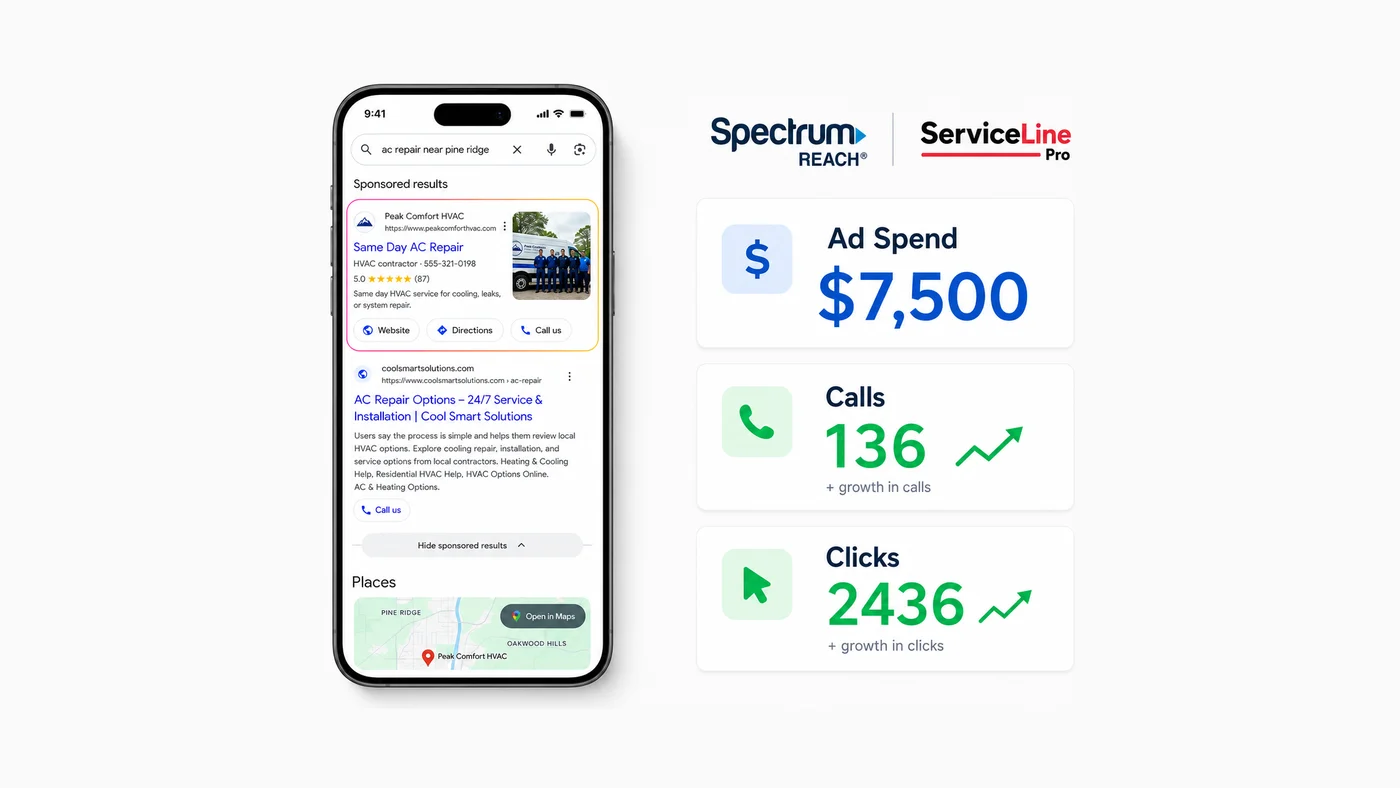
Google Ads with $0 agency fee. Spectrum partnership covers management. Around $5,000/mo typical in a competitive metro. Calls often inside seven days. Split emergency, water heater, drains, and leak detection. Details in Google Ads for plumbers.
Local Services Ads bill per lead and sit at the top. They need reviews and fast response. They do not replace Search structure.
3. Website
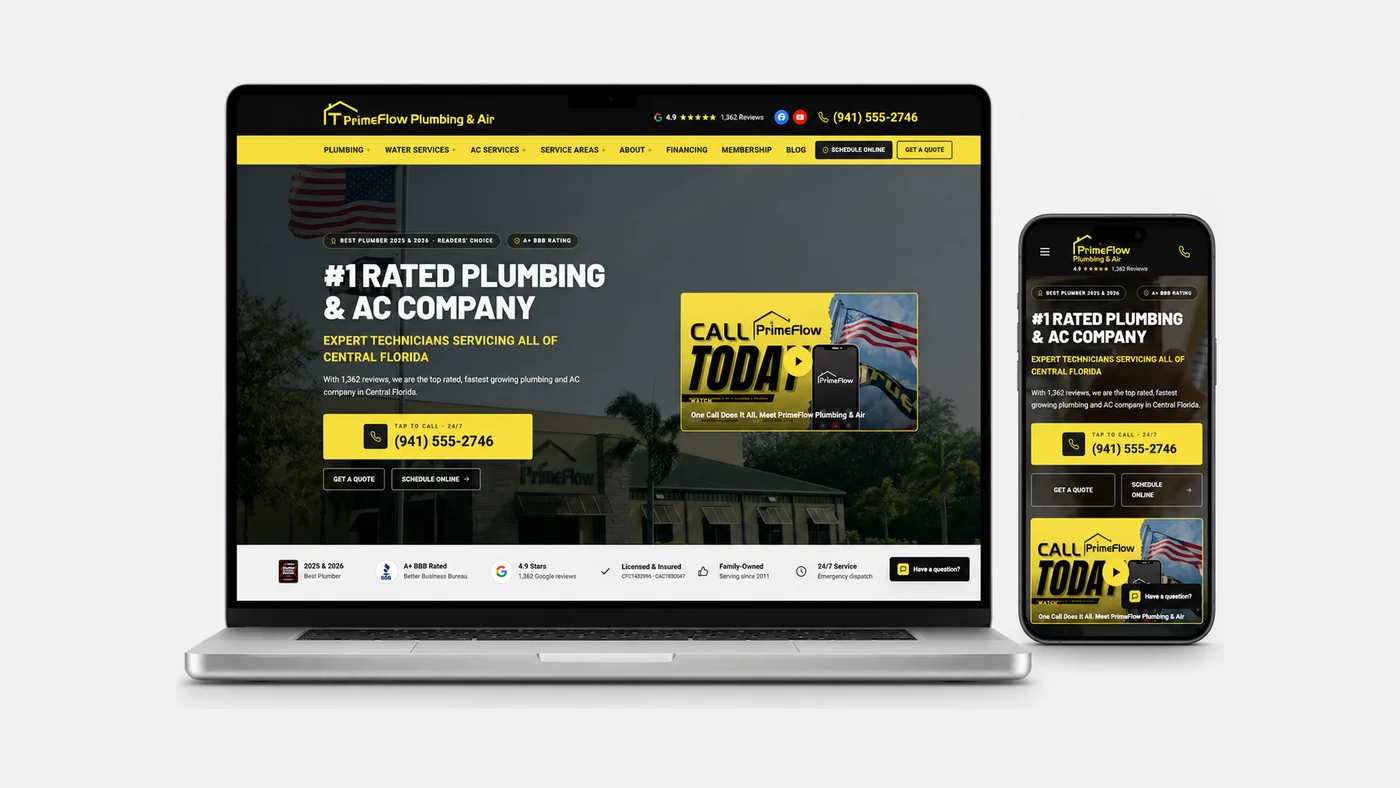
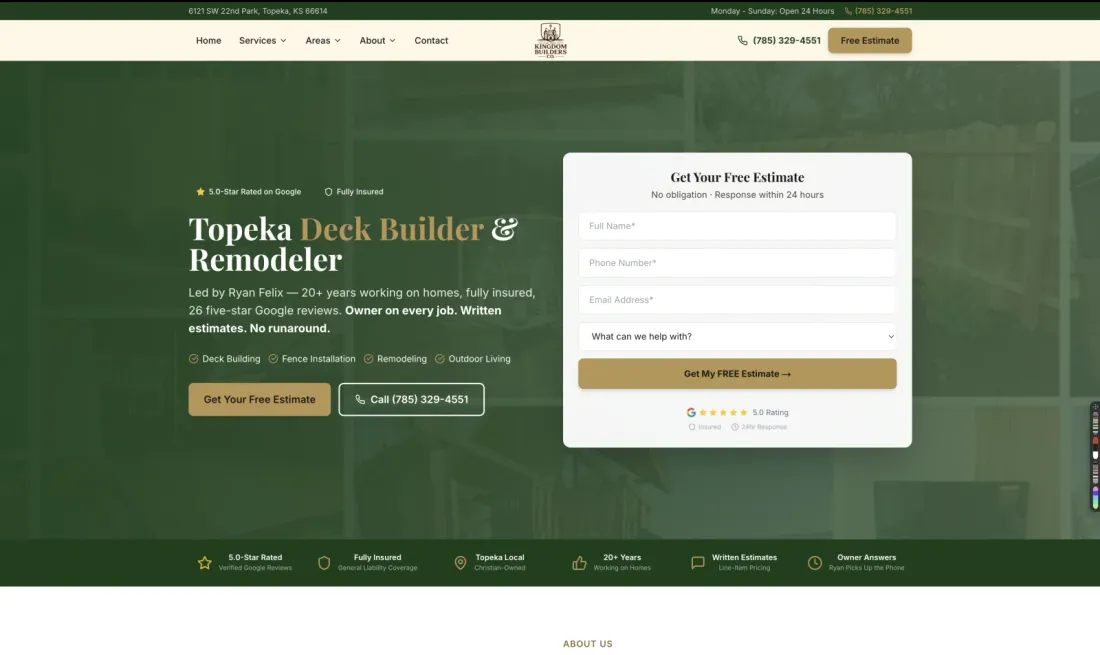
Under two seconds on a phone. 30-day build. $2,500 once or $250/mo for 12 months. Click-to-call, short forms, service pages that match ads.
4. Pay Per Qualified Lead and branding
PPQL: $1,000 deposit credited. Pay for decision-maker calls in business hours with real interest and contact captured. Useful while SEO ramps.
OTT is branding from about $5,000/mo. Nobody calls from the streaming spot. Use it after search tracking works. ChatGPT Ads: $1,500 setup plus $500/mo if you want that product.
Operating questions every campaign must answer
- 01 Which services are most profitable?
- 02 Which ZIP codes are worth more budget?
- 03 Which channels bring high-intent customers?
- 04 Which leads book and produce revenue?
- 05 What should be scaled, cut, or rebuilt?
If the current stack cannot answer those, it is spend. Industry overview: plumbing marketing. Audit: Growth Audit. Call: strategy call at (813) 669-7572.
Frequently Asked Questions
What should plumbing marketing cost per month?
SEO is $3,000/mo with a 90-day Map Pack target. Google Ads media is often around $5,000/mo in competitive metros with $0 agency fee. Website is $2,500 once or $250/mo for 12 months. Size ads to the auction.
Should I hire one vendor for SEO and ads?
You can split them. Then you need one scoreboard: cost per booked job across both. Split vendors without shared tracking is how reports disagree and nobody owns the miss.
Do plumbing companies need social ads?
Paid social exists. Emergency plumbing search is still Google. We do not sell Meta ads as the core lead offer in this plan.
Get a real diagnosis of your business.
A seven-layer review of your SEO, Google Ads, website, and Map Pack presence, delivered as a written report within 72 hours. It's $1,000 and it always credits toward any work you do with us. If we don't find $100,000 in missed revenue, we refund it.
Get the Growth Audit