


A contractor can do excellent work and still lose the job to whoever appears first, answers the phone, and makes booking easy. The customer never sees the better warranty or the more experienced crew.
Results-driven marketing connects visibility, calls, estimates, booked jobs, revenue, and margin in one view. Impressions and raw lead counts are inputs. Profitable work in the towns you actually serve is the result.
What results-driven marketing measures
The path is the same whether you run HVAC, plumbing, roofing, electrical, pools, kitchen and bath, or general contracting. A buyer finds you. They call or submit a form. You qualify them. You schedule. You close. You complete the job at a margin that covers overhead.
Put these numbers on one monthly report:
"A booked-job scorecard for contractors: qualified leads, close rate, cost per job, and a 90-day plan that ties spend to profit."
- ·Qualified lead: a real person who needs a service you sell, in a town you serve, during hours you can respond.
- ·Booked-job rate: booked jobs divided by qualified leads.
- ·Close rate: closed jobs divided by estimates.
- ·Average ticket and gross margin after labor and materials.
- ·Cost per booked job: marketing spend divided by booked jobs.
- ·Missed calls and speed-to-lead during business hours.
Cost per click and cost per lead answer different questions. A cheap click can produce no call. A cheap lead can be a duplicate, a wrong number, or someone outside your radius. Judge the channel by booked work and contribution after job costs.
Example math, not a promise. A plumbing campaign spends $4,000, produces 20 qualified inquiries, and books eight jobs. Cost per booked job is $500. If the average job leaves $900 after direct costs, the campaign can support overhead. If those jobs leave $300, the campaign needs a different service mix or a pause.
Where the funnel leaks
More traffic will not repair an unanswered phone. More forms will not help if estimates get one email and go quiet. A full schedule may mean the next gain is hiring, not buying clicks.
- ·A service page dumps visitors on a generic home page.
- ·The mobile visitor cannot find a tap-to-call number.
- ·The form asks for a life story before a callback.
- ·After-hours calls hit voicemail with no text-back.
- ·The office returns missed calls hours later.
- ·You advertise a service crews cannot schedule for weeks.
Give each leak an owner. Marketing owns landing-page conversion. The office owns answer rate. Sales owns estimate follow-up. Operations owns appointment capacity.
Win high-intent visibility without ranking promises
Google says local results rest on relevance, distance, and prominence. You control relevance with accurate categories, real services, and pages that match the work. You control distance by listing towns you actually serve. Prominence comes from reviews, mentions, and a profile Google trusts.
Do not sell a fixed ranking date. Local SEO campaigns at ServiceLine Pro run $3,000 per month with a 90-day Top-3 Map Pack target. If the target is missed, the work continues. Measure calls, forms, and qualified inquiries from week one.
Google Business Profile
Claim and verify the profile. Use the real business name. Pick one accurate primary category. Add secondary categories only for work you perform. List services and service areas you can cover. Keep hours, phone, and website current. Upload recent job photos. Ask completed customers for honest reviews. The FTC rules on deceptive reviews apply. Never buy reviews.
A profile view is not a job. Track profile calls, website clicks, direction requests, answered calls, estimates, and closed work.
Website conversion
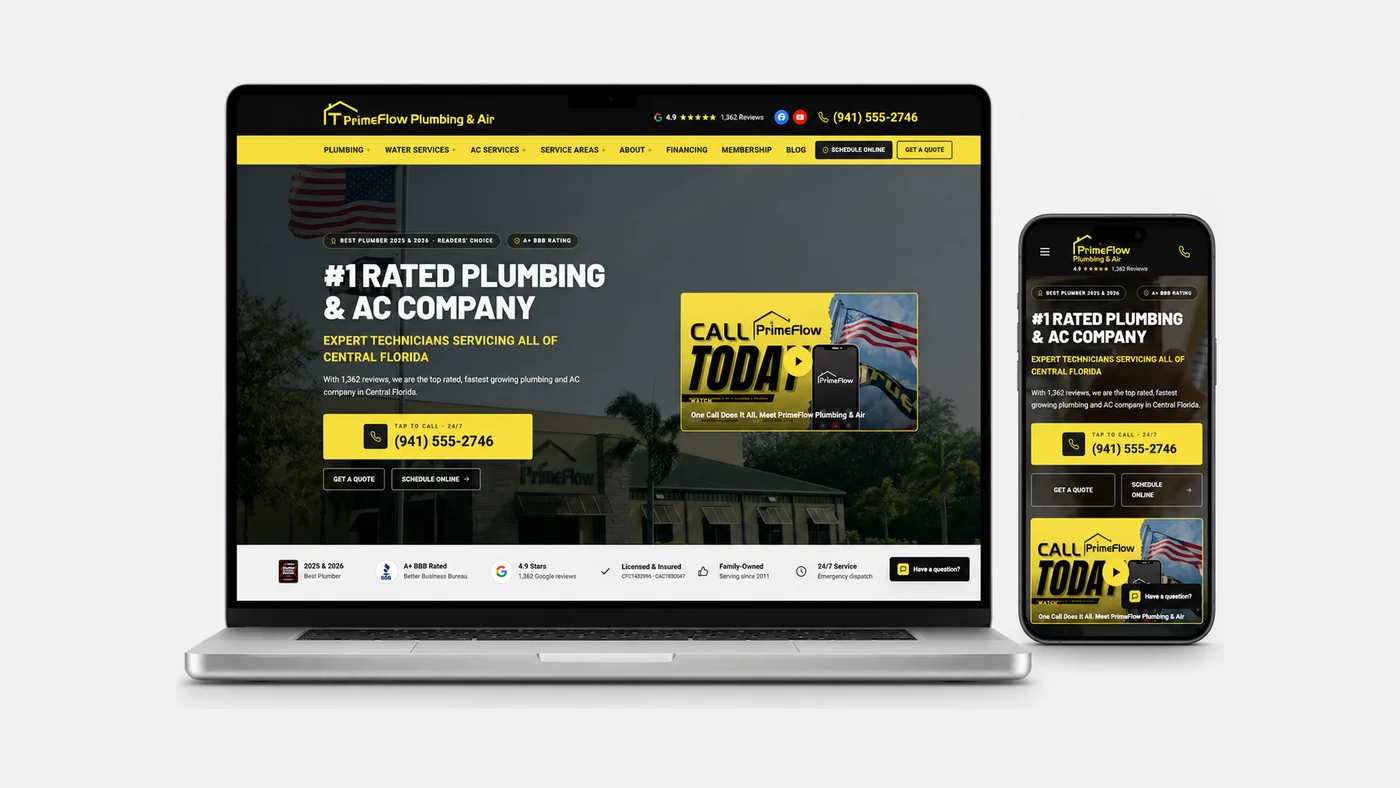
A service page should name the service and the towns, put a phone number and a short form in view, show real jobs, and state licenses, warranties, and what happens after the request. Load in under two seconds on a phone. Performance websites ship in 30 days at $2,500 once or $250 per month for 12 months.
Paid demand only when you can count booked jobs
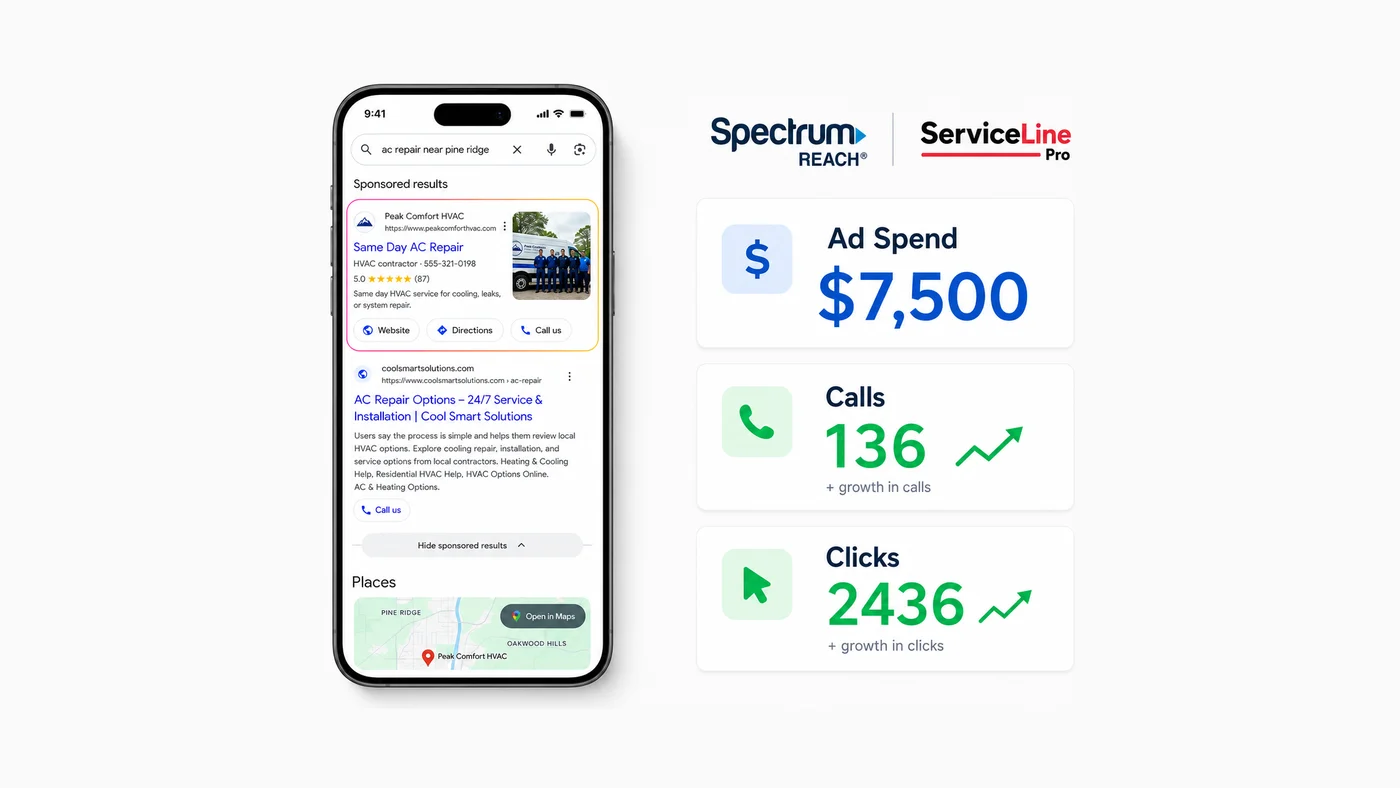
Google Ads can put you in front of people already searching. ServiceLine Pro charges $0 in agency fees. The Spectrum partnership pays us. Typical spend in a competitive metro is around $5,000 per month. Leads often start inside seven days when tracking and call handling already work.
- ·Separate campaigns for high-value services and distinct service areas.
- ·Search terms that show hiring intent, not DIY or job-seeker queries.
- ·Negative keywords for work you do not want.
- ·Landing pages that match the ad.
- ·Call tracking that grades conversations, not just clicks.
Set a cost-per-booked-job ceiling before you raise spend. If an HVAC company can support $600 to acquire a repair job and the campaign books at $350, you have room to test. If booked jobs cost $900 and leave $500 after job costs, pause or rebuild.
Other paid channels
Pay Per Qualified Lead starts with a $1,000 deposit that credits. You pay only for qualified calls: decision maker, business hours, real interest, contact captured. Shared marketplace leads fail that test often. Check exclusivity, service match, refunds, and booked-job rate before you scale.
OTT and streaming TV is branding, typically $5,000 per month and up. Nobody calls from the spot. Use it after search capture works, and define how you will see lift in branded search and direct calls.
ChatGPT Ads are a sold product: $1,500 setup plus $500 per month. Add them after call and job tracking already work. Keep your Apple Business Connect listing accurate. Apple Maps Ads are retired. Do not budget for them.
Budget from job economics, not a copy of a competitor
Suppose a roofing company wants $2 million in new revenue. Average new project is $10,000. Close rate from estimates is 30%. Target cost per booked job is $1,000. That is about 200 closed jobs, which means about 667 estimates if one in three closes. The budget has to create those opportunities, and crews have to deliver them.
From $1 million toward $10 million, the constraint usually changes. Early on you need reliable calls and a clear service area. Later you need territory rules, estimator coverage, and job-level attribution. More demand does not help when nobody can answer, estimate, or install.
A 90-day operating plan
Days 1 to 30: baseline
- ·Audit every source of calls and forms.
- ·Record qualified leads, booked jobs, close rate, average ticket, and cost per booked job by source.
- ·Fix Google Business Profile categories, services, hours, photos, and review process.
- ·Test every phone number, form, and booking path.
- ·Count missed calls and measure return-call time.
Days 31 to 60: capture
- ·Repair the main service pages.
- ·Run Map Pack and organic work on the services and towns that pay.
- ·Launch or restructure Google Ads around measurable demand.
- ·Connect inquiries to estimates and closed jobs.
- ·Ask completed customers for honest reviews.
Days 61 to 90: reallocate
- ·Compare booked-job cost by service, town, and source.
- ·Pause waste. Raise spend only where job economics support it.
- ·Document the next constraint: phones, estimators, close rate, or crew capacity.
Ninety days can clean attribution and show which channels deserve more testing. It cannot promise identical Map Pack movement in every market.
How to evaluate an agency
Ask for qualified leads, booked jobs, close rate, average ticket, cost per booked job, missed calls, and revenue from closed jobs. Ask who owns the website, domain, ad accounts, Google Business Profile, call tracking, and analytics. You should keep access. Ask whether they already serve a competitor in your category and market, in writing.
A ranking screenshot is not revenue. A lead dump is not booked work. Book a strategy call if you want reporting that stops at jobs, or start with a $1,000 Growth Audit. Call (813) 669-7572.
What is results-driven marketing for a contractor?
It judges spend by qualified opportunities, booked jobs, revenue, and margin. Clicks and rankings support the review. They are not the finish line.
How do I calculate cost per booked job?
Divide marketing cost by booked jobs in the same period. Use the same source labels from first inquiry through the closed job.
Should I use SEO or Google Ads first?
Ads can produce calls inside a week when tracking and phones work. SEO builds a longer-lived asset. Compare both on booked jobs, not vanity rankings.
Are pay-per-lead services worth it?
They can work when the call is exclusive, in-area, the right service, and profitable after duplicates and no-shows. Pay Per Qualified Lead is built around that definition.
Get a real diagnosis of your business.
A seven-layer review of your SEO, Google Ads, website, and Map Pack presence, delivered as a written report within 72 hours. It's $1,000 and it always credits toward any work you do with us. If we don't find $100,000 in missed revenue, we refund it.
Get the Growth Audit