





Google Ads bidding is the amount you are willing to pay for a click or a conversion in an auction that runs every search. For a Florida HVAC or roofing company, the mistake is treating the bid strategy as a personality test (I like automation) instead of a data test (do I have enough tracked conversions for the algorithm to learn).
This guide stays on bidding. Targeting, checklists, and how the auction works at a higher level live in sibling posts. Read those if the account is still mixing the whole state into one campaign.
What the auction actually scores
Ad Rank is bid times quality signals (expected click-through, ad relevance, landing page experience) plus other context like device and location. A higher bid does not always win. A slow homepage with a generic ad loses to a tighter competitor at a lower bid.
You never see the other shop's exact bid. You see whether you showed, at what cost, and whether the click called. That is enough.
"Google Ads bidding for Florida contractors: how the auction works, when to use Maximize Conversions or Target CPA, and how to avoid starving a new account."
Manual CPC
You set max CPC by keyword or ad group. Useful at launch when conversion tracking is new, or when volume is so low the algorithm has nothing to learn. It demands weekly search-term work. It does not magically save money if your geo is still statewide.
Maximize Clicks
Google spends the budget to get clicks. Fine for a short test to fill the terms report. Dangerous as a steady state for expensive trades, because it will buy cheap irrelevant clicks if you let it.
Maximize Conversions
Google tries to get the most conversion actions inside the budget. This is the usual next step once calls and forms track for a couple of weeks. If you marked newsletter signups as conversions, it will buy those. Conversion hygiene is the strategy.
Target CPA
You tell Google the cost per conversion you want. It needs history. Set it too low on a new Florida roofing campaign and impressions collapse. Set it after you know a realistic cost per lead, then tighten toward cost per booked job as you import offline conversions.
Target ROAS
Needs revenue values on conversions. Most service accounts do not have clean job-value data on day 30. Skip it until the CRM can pass revenue. A $400 drain clearing and a $18,000 remodel should not look identical to the bidder.
Enhanced CPC and older hybrids
Google has moved accounts toward Smart Bidding. If you still have eCPC, treat it as a transitional setting. Do not mix three strategies in one campaign while you debug tracking.
Florida wrinkles that change bids
Storm searches auction like emergency plumbing: high CPC, high intent, short patience. Use a separate campaign with a hard daily cap so a two-day event cannot empty the month. Heat-wave HVAC is similar at a smaller scale.
Tourist zips and snowbird season change conversion rate. A Target CPA trained in August may overbid in a slow month or underbid when demand returns. Recheck targets quarterly.
A bidding sequence that does not starve the account
- 01 Prove conversions fire (test call, test form).
- 02 Run Maximize Conversions or careful manual CPC until you have a few weeks of real leads, not two conversions.
- 03 Read search terms and geo. Add negatives before you tighten CPA.
- 04 Set Target CPA near recent actual CPA, then lower in small steps.
- 05 Import booked jobs when the CRM is ready. Then the bid can optimize toward money.
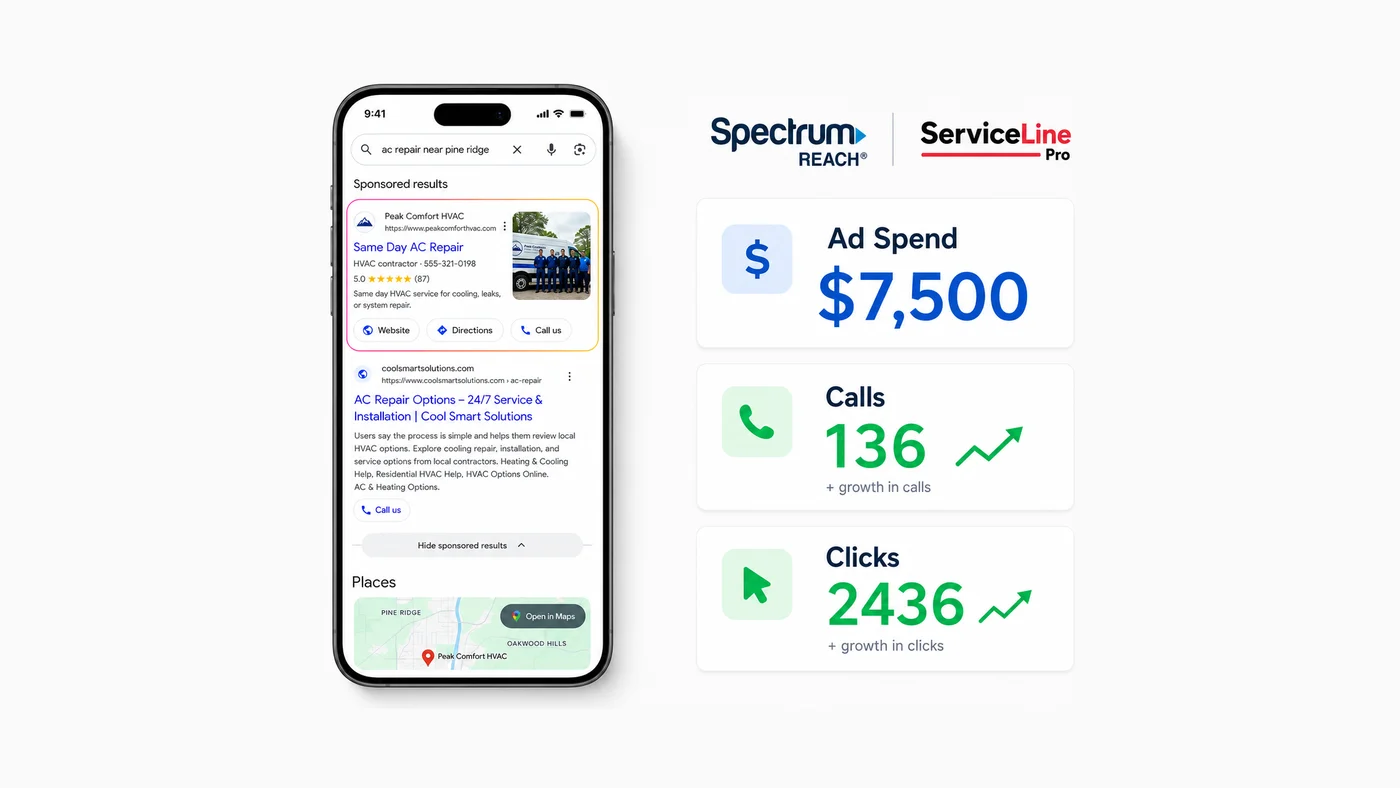
In competitive Florida metros, plan around $5,000 per month in spend so the algorithm sees enough auctions. Google Ads is $0 agency fee at that level through Spectrum. Leads often appear inside seven days. Bidding still takes a few weeks to settle.
For a bid and tracking review, use the $1,000 Growth Audit or book a strategy call at (813) 669-7572.
Portfolio bid strategies and when to avoid them
Google will offer to share a bid strategy across campaigns. That blends a $12,000 remodel campaign with a $189 drain clearing campaign. Keep high-ticket and low-ticket bid strategies separate until values are imported correctly.
Device and location bid adjustments
On manual CPC you can still nudge mobile or a city. On Smart Bidding, Google wants conversions to do that job. If mobile converts and desktop does not, fix the desktop page or stop sending desktop clicks. Do not fight the algorithm with a pile of overlapping adjustments and a Target CPA at the same time.
Shared budgets across unlike campaigns cause the same blending problem. Give each service a budget you can explain to yourself.
Frequently Asked Questions
Should I use Target Impression Share to stay at the top?
Usually no for lead gen. You will overpay to sit above a competitor. Use it only for a branded campaign if a rival is bidding on your name.
Why did my leads drop after I switched to Target CPA?
The target was below what the auction required, or conversion volume was too thin. Raise the target or revert until history exists.
Is Maximize Conversion Value better than Maximize Conversions?
Only if each conversion has a trustworthy value. Otherwise Google chases whatever number you stuffed in.
Do LSAs use these bid strategies?
LSAs use a weekly budget and a max per lead. Different product. Do not copy Search bid tactics onto LSAs.
Get a real diagnosis of your business.
A seven-layer review of your SEO, Google Ads, website, and Map Pack presence, delivered as a written report within 72 hours. It's $1,000 and it always credits toward any work you do with us. If we don't find $100,000 in missed revenue, we refund it.
Get the Growth Audit