

Paid advertising is buying attention instead of waiting for a ranking. For a service owner that usually means a click on Google, a Local Services Ads lead, or a qualified inbound call you pay for after it meets a standard. Branding on streaming TV is paid too, with a different job: people remember the name. They almost never call from the spot.
This guide is for owners who write the checks. It covers what you are buying, which channels fit high-ticket trades, and how to know if the spend is producing booked work.
What you are actually buying
Every paid channel sells a different unit. Mix them up and the reports lie.
- ·Pay per click: you pay when someone clicks the ad. Google Search ads work this way.
- ·Pay per lead: you pay when Google or another network sends a lead, as with Local Services Ads.
- ·Pay per qualified call: you pay when a real decision maker with a real job reaches you in business hours. That is Pay Per Qualified Lead.
- ·Pay for reach: you pay to be seen on connected TV. Use it for brand, not for same-day calls.
Directory ads on review sites exist. Treat those platforms as citation and review homes first. Do not build your lead plan around buying their ads. Apple Maps remains useful as a listing through Apple Business Connect. Apple Maps Ads are retired. Do not budget for them.
"Paid advertising for contractors means paying for a click, a lead, or a qualified call. Which channels fit service businesses, what they cost, and how to track them."
Channels that fit a service company
Google Search ads
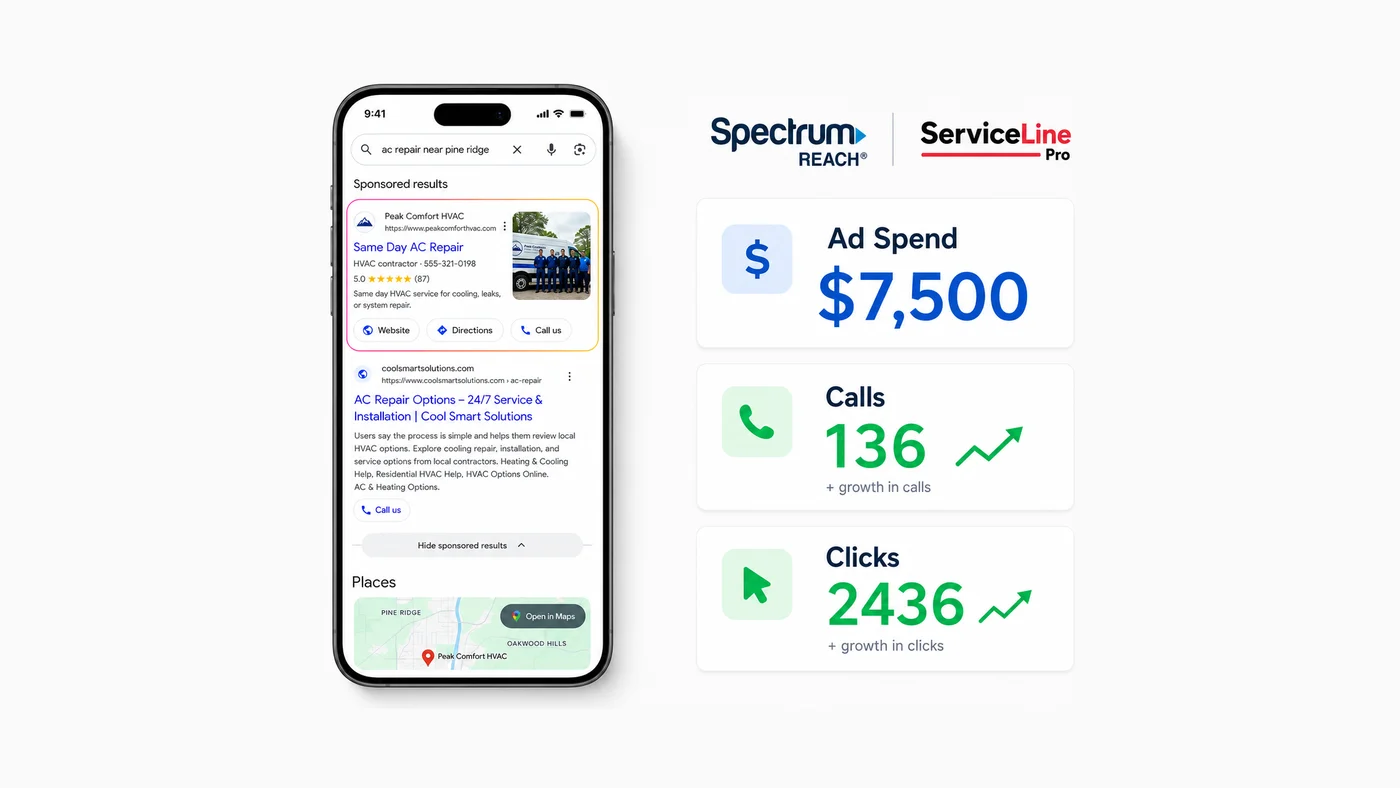
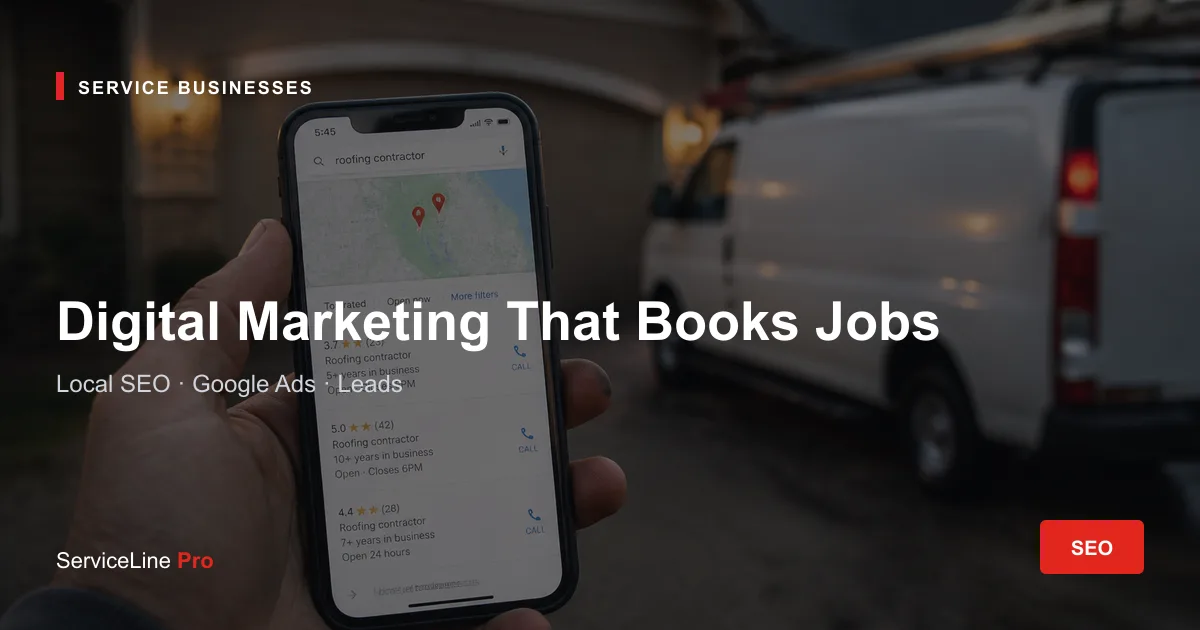
Someone types pool construction, roof replacement, or emergency plumber and sees your ad. You control keywords, location, hours, and the landing page. In a competitive metro, plan around $5,000 per month in ad spend. Through our Spectrum partnership, Google Ads management is $0 agency fee at that spend, so the budget buys clicks. Leads often show inside seven days if tracking and the site can take a call.
Local Services Ads
LSAs sit above search ads with a Google Guaranteed or Google Screened badge. You pay per lead, not per click. They reward a thick review profile and fast response. License and insurance paperwork has to match. See our Florida walkthrough of Google Local Services Ads for eligibility and common mistakes.
Pay Per Qualified Lead
PPQL starts with a $1,000 deposit that credits toward qualified calls. You pay for decision makers, in business hours, with real interest and a captured contact. Spam, vendors, and out-of-area tire kickers do not count. This fits shops that want pipeline without a retainer on media.
ChatGPT Ads
ChatGPT Ads are a sold product: $1,500 setup and $500 per month, plus media billed by ChatGPT. Use them when you already track calls and jobs. They put you in AI answers. They are not a ranking method and they are not a substitute for Google Search.
OTT and connected TV
OTT/CTV is branding. Typical spend starts around $5,000 per month. Nobody calls from the commercial. Pair it with search ads and a site that can convert the people who later Google your name.
What paid advertising is not
It is not a substitute for answering the phone. A $40 click that rings to voicemail is a donation. It is not a way to skip landing pages. Sending every ad to the homepage wastes budget. It is not Meta ads as a primary lead engine for most trades. Paid social exists. For booked jobs, start with search intent.
How to structure a first campaign
- 01 Pick one service you want more of, not ten.
- 02 Draw a tight geo: cities or a radius you actually roll trucks in.
- 03 Send clicks to a page for that service with click-to-call and a short form.
- 04 Add conversion tracking for calls and forms, then import booked jobs later.
- 05 Set hours so ads pause when nobody will answer.
- 06 Review search terms weekly and add negatives for DIY, jobs, and cities you skip.
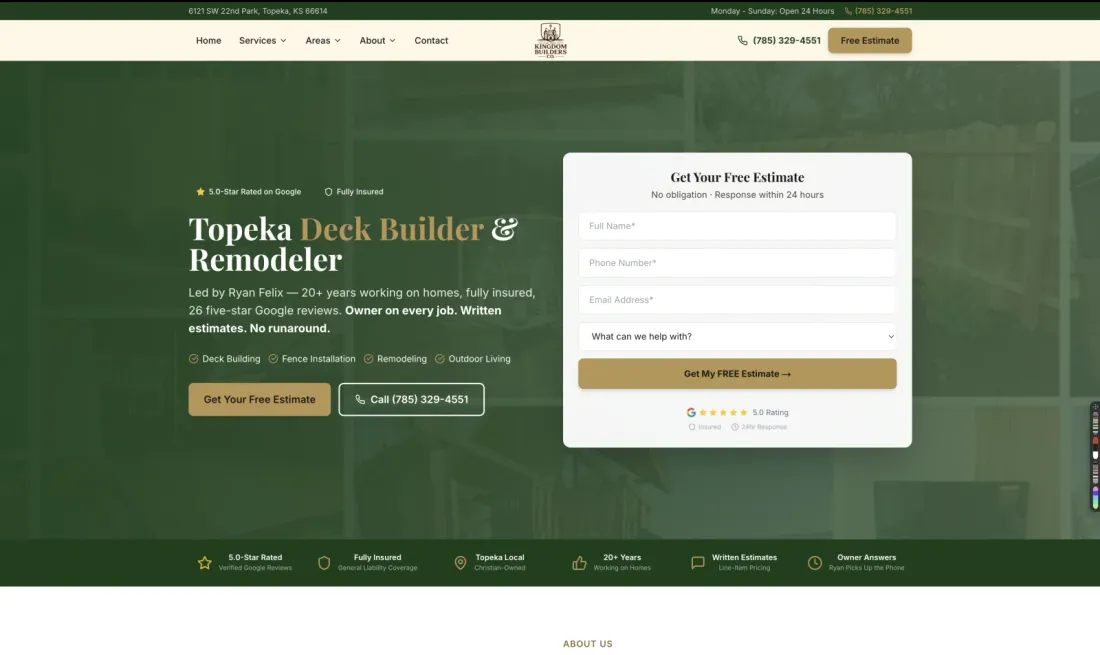
Websites we build load in under two seconds, which keeps Quality Score and conversion from collapsing on mobile. If the current site is slow, fix that in parallel. See performance websites: $2,500 once or $250 per month for 12 months, live in 30 days.
Paid ads and SEO together
Ads fill the calendar this month. SEO campaigns at $3,000 per month work toward a Top-3 Map Pack position in 90 days so you own more of those same queries later. Feed the keywords that convert in ads into your service pages. That is how paid search pays for the asset, not only for this week's jobs.
To see what your current spend is producing, use the $1,000 Growth Audit. To build the mix, book a strategy call at (813) 669-7572.
Objections owners raise on the first call
I tried ads and they did not work. Usually the geo was statewide, the page was the homepage, or nobody answered. Fix those three before you swear off the channel.
I cannot afford $5,000. Then pick a smaller map and one service, or use PPQL if you want to pay per qualified call instead of per click. A $500 month in a competitive metro often dies before it learns.
I only want branding. Then say so and budget for OTT knowing the phone will not ring from the spot. Do not buy Search ads and judge them as brand.
Tracking that makes paid advertising honest
Unique numbers on ads vs GBP vs the organic site. A CRM stage for booked, not only for new lead. A weekly 20-minute review of search terms. Without those, every vendor can claim the job that came from a neighbor.
Frequently Asked Questions
How much should a contractor spend on paid ads?
In a competitive metro, around $5,000 per month is a typical Google Ads starting point. Smaller towns can run less. Below a few thousand, learning is slow and one bad week eats the budget.
How fast do paid ads produce leads?
Search ads often produce calls inside seven days if tracking, geo, and the landing page are set. LSAs depend on review volume and response time. PPQL ramps over 45 to 60 days.
Do I need an agency fee on Google Ads?
Many agencies charge 15 to 20 percent on top of spend. ServiceLine Pro runs Google Ads at $0 agency fee through a Spectrum Reach partnership at qualifying spend.
Should I buy ads on every platform at once?
Start with Google Search or LSAs, plus tracking. Add ChatGPT Ads or OTT after you can name cost per booked job on the first channel.
Get a real diagnosis of your business.
A seven-layer review of your SEO, Google Ads, website, and Map Pack presence, delivered as a written report within 72 hours. It's $1,000 and it always credits toward any work you do with us. If we don't find $100,000 in missed revenue, we refund it.
Get the Growth Audit